
Topics:
Government Blog
You’ll find the latest government news and announcements from Intelliworx, plus insights and analysis as we blog on the B2B topics that matter to the federal government community, including financial disclosure, application management, and telework.
3 survey findings about the government’s efforts to implement AI in agencies
A report on the findings identifies the top challenges for implementing AI, the technical and non-technical barriers to scale and the benefits of pressing forward “Federal agencies are embracing AI at an accelerating pace…the key now is to scale AI efficiently and cost-effectively, transitioning from experimentation to execution, and ultimately to sustained usage.” That’s according to a survey commissioned by ICF and conducted by Wakefield Research: The AI Advantage: Moving from exploration to impact. The survey polled 200 U.S. federal program and mission leaders with the following qualifying titles: program manager, mission owner, division lead, branch/area chief, CXO, CIO, VP or equivalent.” While recent news reports indicate the official tally of government AI use cases compiled by OPM has doubled since a year ago, many of these are experiments. The ICF survey found 41% of respondents indicated they “are running small-scale pilots.” Another 16% “are actively scaling AI efforts,” and […]
![Practical steps agencies can take to mitigate financial disclosure controversies [GovExec]](https://intelliworxit.com/wp-content/uploads/2026/06/mitigate-financial-disclosure-controversies-AdobeStock_268264646.webp "Practical steps agencies can take to mitigate financial disclosure controversies [GovExec]")
Practical steps agencies can take to mitigate financial disclosure controversies [GovExec]
In a new GovExec commentary, John L. Martin, Esq., a former government lawyer who consults with Intelliworx on financial disclosure best practices, looks at how scattered handling of supplemental disclosure forms can create ethical blind spots. Travel reimbursements, widely attended gatherings, and outside activities are often reviewed in isolation, so no single official sees the full picture. Martin points to the recent charges against John Windom, the former lead of the VA’s Electronic Health Record Modernization project, as a cautionary case of what those gaps can allow. Martin lays out three practical steps agencies can take to reduce that risk. First, centralize supplemental processes so every ethics official reviewing a form can see the related disclosures around it. Second, create a clearinghouse with a common entry point where every review starts in the same place, which reduces the chance to forum shop an answer. Third, drive agency-level alignment through consistent […]

Why is integration so hard for the federal government?
Siloed development and inconsistent data standards create integration barriers at scale, making fed tech interoperability as much a governance and cultural challenge as a technical one by Intelliworx One of the biggest challenges in modernizing its technology is integration. GAO reports have cited interoperability as a key challenge that has hindered several high-profile technology projects. Why is integration such a challenge? “[Government] Systems don’t talk to each other. They weren’t designed with that goal in mind, so it creates a big, big gap in what’s needed right now versus what’s available,” the EPA’s CIO Carter Farmer told FedScoop in a piece exploring the proliferation of technical debt. Many of the legacy systems the government relies on are decades old. In a sense, systems integration is a bit like trying to plug a modern smartphone into an old landline telephone jack and expecting the contacts to synchronize and the apps to […]
CIOs, CAIOs, and CDOs: survey says these federal roles need more clarity
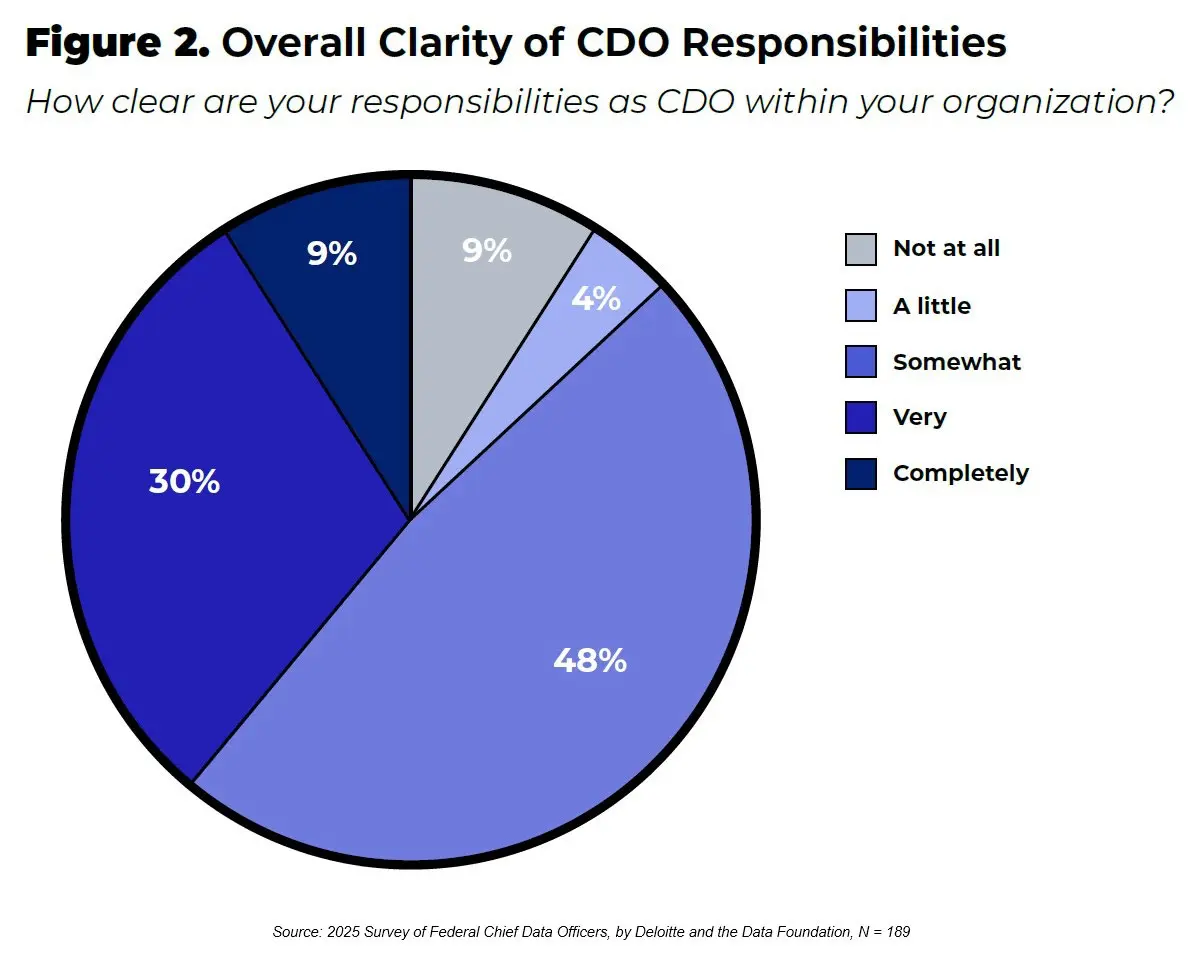
“Despite modest improvements in overall role clarity, the expanding and overlapping nature of data and technology leadership roles create ongoing confusion.” Sometimes a job grows too large for any one leader to effectively manage. Managing technology is a prime example. Where technology was once the sole purview of the CIO, the integration of technology into daily work has made it too big a job for any one leader. There have been a number of new technology-related leadership titles cropping up in the last decade or so: chief technology officer (CTO) chief information security officer (CISO) chief privacy officer (CPO) or the senior agency official for privacy (SAOP); and chief data officer (CDO). The role of the CDO was fueled by the Evidence Act, which was signed into law in early January 2019. It required government agencies to create a CDO position, whose goal was to ensure government data was accessible […]
Federal CDO-CIO relationships are driving a data-centric culture
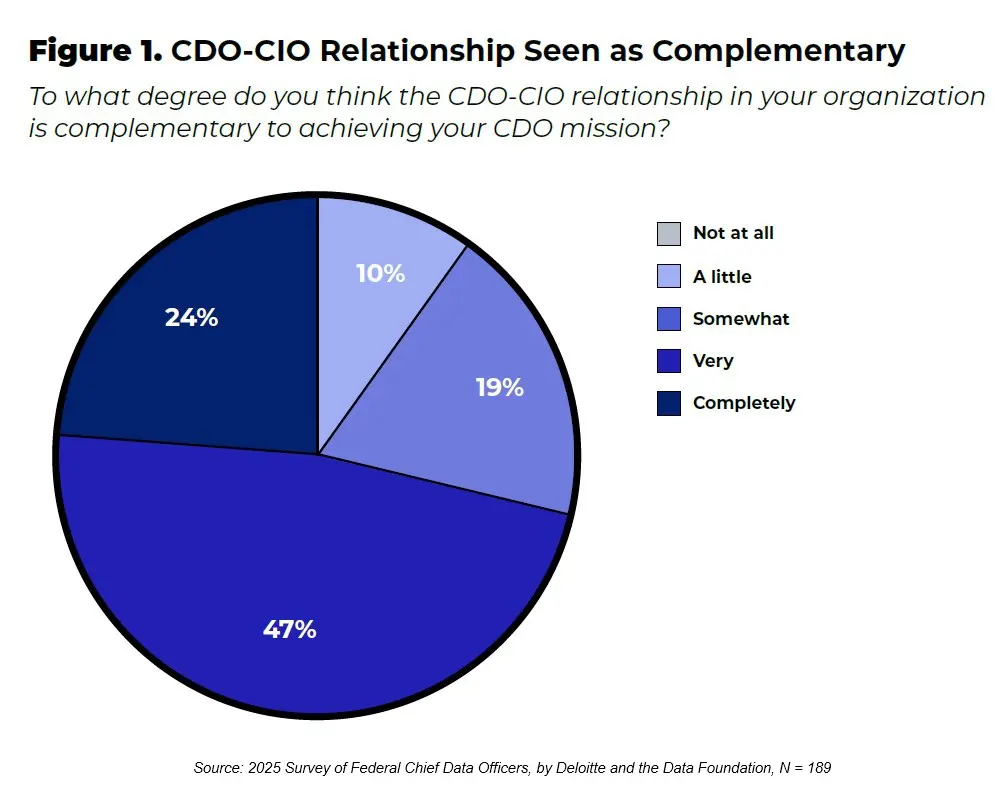
CDOs say close collaboration with CIOs also helps IT project prioritization, lends authority, and supports budget allocation Federal chief data officers (CDOs) faced a wave of changes in recent years, according to a survey of chief data officers, by Deloitte and the Data Foundation: “The CDO community navigated a year of unprecedented change, including a new administration, unexpected workforce reductions, and evolving AI priorities, while continuing to mature as a function across the federal government.” One of the most significant changes was to their reporting structure as nearly a quarter (24%) got a new boss last year. More than half of CDOs (52%) say they now report to the chief information officer (CIO), which is up substantially from 36% in 2024 and 33% in 2023. Stay in touch by subscribing to our email newsletter. We will never share or sell your email address. Complementary working relationships The CDO reporting […]
Federal chief data officers are “critical” to scaling government AI
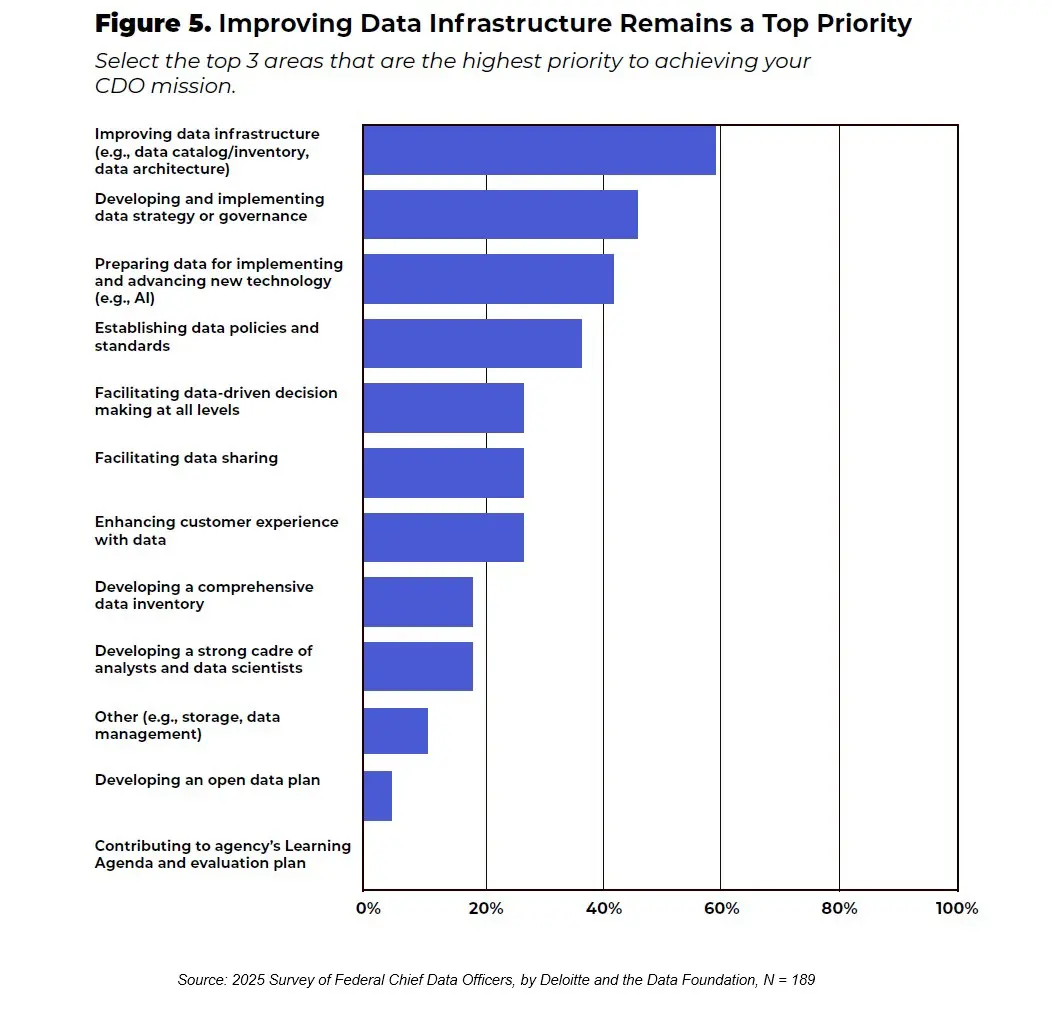
CDOs are the caretakers of government data, drive internal and external collaboration, and may have sound ideas for developing AI implementation metrics The federal government’s experimentation with AI has grown substantially. OMB recently reported 3,600 different use cases, which represents 70% growth over previous years, according to FedScoop. As the use cases pile up, one technology role is emerging as instrumental for success in AI: the chief data officer or CDO. The “expanding intersection of data and artificial intelligence responsibilities” was “a common theme” in a newly published survey by Deloitte and the Data Foundation. As one of the 189 CDOs polled for the 2025 Survey of Federal Chief Data Officers, which was published in March 2026, characterizes the role as ‘more critical with the introduction of AI.’” The survey findings point to three clear reasons, which follow below. Stay in touch by subscribing to our email newsletter. We will […]
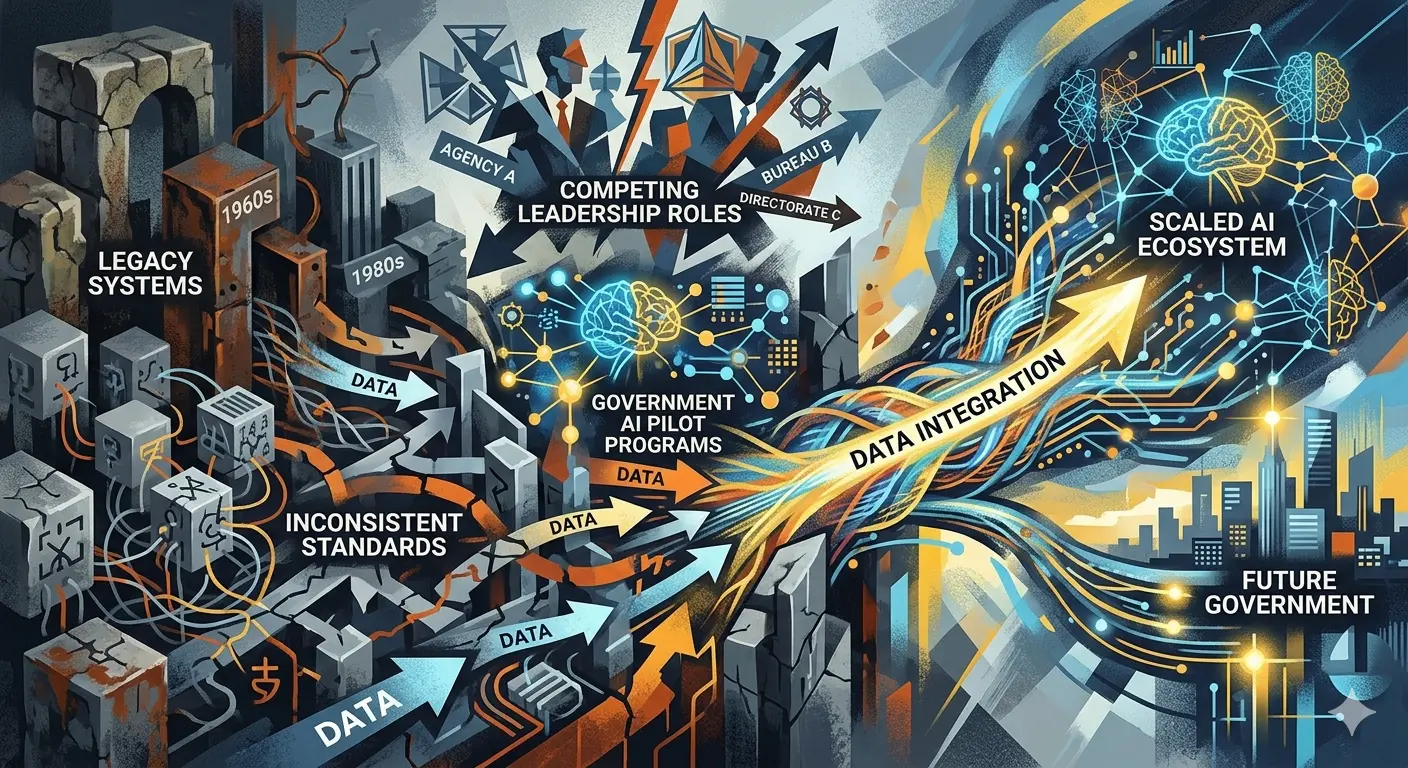
Should data integration be elevated as a federal tech priority?
Legacy systems, inconsistent standards, and competing leadership roles make data integration hard – but it may prove crucial to scale government AI pilot programs by Intelliworx Nearly a dozen chief information officers (CIOs) at federal agencies recently outlined their top 10 technology priorities for 2026. Artificial intelligence (AI) was at the top of the list, and the Internet of Things (IoT) was at the bottom. Here are the priorities in order: Artificial intelligence and machine learning; Infrastructure modernization; Cybersecurity and risk management; Zero trust architecture; Data management and analytics; Applications modernization; Cloud computing; Workforce transformation; Digital government and citizen experiences (i.e., CX); and Internet of Things (IoT) management. One important aspect of technology that isn’t mentioned is data integration. To be fair, many technologists would argue that data integration is an implied task associated with modernization and data management. These are the high-level objectives – the variety used to justify budget requests. […]

20 current statistics summarizing the U.S. government’s spending on IT [with citations]
The federal government invested more than $100 billion in IT during FY 2025, across more than 4,000 projects within 25 different agencies by Intelliworx The U.S. government is by far the biggest IT customer in the world. Based on a 2025 estimate for global IT spending by the technology research firm Gartner, the federal government accounts for about 1.8% of all IT spending globally. It’s an eye-popping number for sure, but context is important. So, we recently dove into the available public data on the spending. We should note that we found a few interesting historical factoids – and did some of our own ‘napkin math’ along the way. Stay in touch by subscribing to our email newsletter. We will never share or sell your email address. 1. How much does the federal government spend on IT The U.S. federal government invested $102.31 billion in information technology during its 2025 fiscal […]
![Philosophical considerations for government AI keeping a “human in the loop” [HITL]](https://intelliworxit.com/wp-content/uploads/2026/03/government-ai-hitl-Gemini_Generated_Image_44rxyn44rxyn44rx-scaled.webp "Philosophical considerations for government AI keeping a “human in the loop” [HITL]")
Philosophical considerations for government AI keeping a “human in the loop” [HITL]
Lessons from 50 years of customer service automation: as AI adoption accelerates and AI agents are poised to function autonomously, human judgment and oversight are essential by Intelliworx When technology works as intended, it streamlines workflow, automates rote work and boosts productivity. The challenge is that it doesn’t always work as intended. Sometimes this works out well. For example, the collaboration tool Slack was originally created as an internal communications platform for a gaming company. That focus didn’t take hold in the market, so the company pivoted and the rest is history. At other times, it leads to unintended consequences. This is particularly true for anomalies and corner cases. These are the variety of issues that don’t fit neatly in a spreadsheet and break the binary limitations of traditional computing processes. Over-reliance on automation in customer service Customer service is the quintessential example. This function has become highly automated, and […]
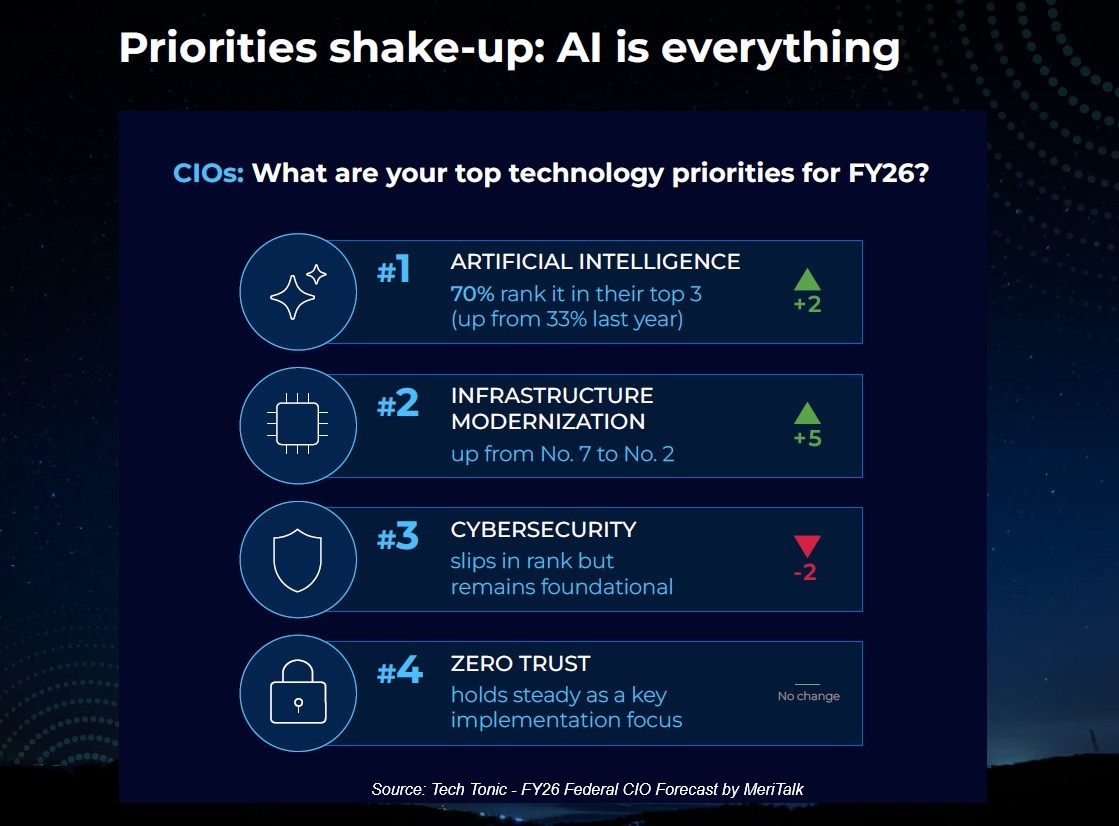
10 Federal CIOs say AI, cybersecurity and tech modernization are the top priorities
Agency tech leaders are optimistic about the government’s ‘enterprise mindset’ but caution more leader support needed to modernize IT infrastructure and achieve priorities Artificial intelligence (AI) is the top priority for 2026 in federal technology circles. That’s the main finding in a new report – Tech Tonic: FY26 Federal CIO Forecast – by MeriTalk. The second annual report is based on a survey and interviews with 10 chief information officers (CIOs) who lead technology for 10 different federal agencies. Cybersecurity and risk management were the top priorities in the same report last year, which forecasted FY25. While cybersecurity is still a clear priority, it fell to third place for FY26, trailing AI and infrastructure modernization. This year’s report did not name the CIOs included in the study. However, last year’s report did and it was a ‘who’s who” list that included CIOs from departments including Labor, Treasury, Agriculture, Transportation and […]