
Intelliworx News and Announcements
Find the latest news and announcements from Intelliworx, plus insights and analysis as we blog on the B2B topics that matter to the federal government community, healthcare facilities, and the private sector.

How the VA is convincing providers to consider working in rural healthcare
Resident feedback in a pilot that improves veteran healthcare access shows exposing providers to rural healthcare rotations is a “grow-your-own” strategy for solving the talent shortage by Intelliworx Cracking the code to attract more providers to careers in rural healthcare may be as simple as exposing them to the experience. A new pilot program established by the Department of Veterans Affairs (VA) is receiving rave reviews from participating medical residents. “Surveys of residents who have taken part in the pilot report overwhelmingly positive experiences,” according to a public affairs story published on the government agency’s website. That alone ought to be music to a rural healthcare recruiter’s ears, yet the sentiment expressed by doctors who’ve taken part is even more compelling: “After my rotation, I would seriously consider working at an IHS or VA facility,” said resident Dr. Chantel Clark. Stay in touch by subscribing to our email newsletter. We will […]
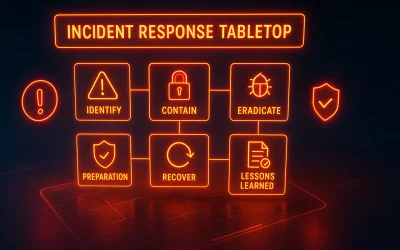
Perceiving “failure” as lessons learned: 5 truths for modernizing government tech
Government tech leaders can break the cycle of risk aversion by reframing project setbacks as essential learning opportunities that drive iterative modernization and cultural change by Intelliworx Few topics attract attention in technology circles like a failed IT project. In government circles, the fear of failure with technology projects is real. High-visibility government technology projects that fall short of promises earn negative news, commentaries, GAO reports and potentially congressional hearings. The risk of failure is fairly high, too. By the government’s own accounting, its track record leaves a lot to be desired. As a result, it’s reasonable for a civil servant to believe that being part of a high-visibility IT project that fails will adversely impact their career progression. This incentivizes the status quo and resistance to change. Silicon Valley recognized this problem – phrases like “fail fast” and “embrace failure” changed the perception of that word. Instead of viewing […]

Real-world lessons from implementing AI in rural healthcare
From emergency department pilots to campus-wide rollout, rural facilities share hard-won lessons on AI implementation, including leadership education, steering committees, safe experimentation, and using ambient tools to ease provider workload When everyone else is zigging, that’s a good time to zag. Such was the case for the Arizona-based Mount Graham Regional Medical Center when it implemented an ambient listening tool, powered by AI, in its facility. While many hospitals are focused on bringing this to clinics, this hospital started with the emergency department (ED), according to Justin Millar, the organization’s CIO. His comment was part of a webinar hosted by the American Hospital Association (AHA) titled “Building the AI-Ready Rural Workforce: What Leading Hospitals Are Doing Now.” The session provided first-hand accounts of AI implementations from four executives across three different rural facilities. AI to improve patient charts with less effort Ambient listening tools promise to help doctors with charting […]

How the USDA modernized its tech infrastructure for crop inspections
The SCION project digitized paper-based processes, replaced legacy systems, and is projected to save $1.7M annually without disrupting business operations One of the key challenges the government faces in modernizing its IT infrastructure is the disruption of operations. The government, generally, can’t stop doing its business to upgrade its technology systems. Applications still need to be accepted, permits must be issued and safety net program checks can’t stop being cut. So, how are different agencies approaching modernization projects – while maintaining continuity of business operations? To answer that question, we aim to take a look at some of the modernization projects that have been cited in the public record as successful. In this piece, we will break down one such project: how the USDA modernized its Specialty Crops Inspection Operating Network (SCION) system. While Intelliworx was not a part of this project, it involved digitizing paper-based processes, which is an […]

The top skills the government needs to implement AI effectively
Data analysis, project management for AI, and infrastructure management are among the top skills agency leaders say they need to develop to move AI pilot projects to production There’s a lot that’s been said about prepping government data for AI. One of the top ways leaders are working to achieve that goal is “expanding workforce training on data management and AI.” That’s according to a survey of 200 government leaders conducted by ICF and Wakefield Research. The survey found 70% of respondents “acknowledged that they will need to upskill existing staff and/or hire new talent to implement AI effectively.” What’s more, “58% say they either have – or can develop – the skills necessary for AI implementation without hiring additional staff.” That 58% figure is a combination of two findings: 31% said their agency has the skills needed now; and 27% said, “yes, if we upskill our current team.” The […]

How government agencies are prepping data for the AI transformation
Governance frameworks, workforce training and partnering with external organizations top the list of strategies to get data AI-ready There’s one recurring theme in published commentaries about the government’s effort to implement AI: data readiness. “The major challenge facing federal agencies is data readiness,” wrote Daniel Kent, an assistant vice president for systems engineering, federal, at Everpure, in a commentary published by FedScoop. That’s just one example. We cited three others previously in this piece: Should data integration be elevated as a federal tech priority There are probably many more. The message seems to be resonating, according to a survey of federal leaders working on AI initiatives by ICF and Wakefield Research. While the survey found 83% of respondents said government data “isn’t quite there yet,” about two-thirds (66%) are “confident that their data will be AI-ready in two years or less.” 9 ways agencies are getting data AI-ready So, […]

3 survey findings about the government’s efforts to implement AI in agencies
A report on the findings identifies the top challenges for implementing AI, the technical and non-technical barriers to scale and the benefits of pressing forward “Federal agencies are embracing AI at an accelerating pace…the key now is to scale AI efficiently and cost-effectively, transitioning from experimentation to execution, and ultimately to sustained usage.” That’s according to a survey commissioned by ICF and conducted by Wakefield Research: The AI Advantage: Moving from exploration to impact. The survey polled 200 U.S. federal program and mission leaders with the following qualifying titles: program manager, mission owner, division lead, branch/area chief, CXO, CIO, VP or equivalent.” While recent news reports indicate the official tally of government AI use cases compiled by OPM has doubled since a year ago, many of these are experiments. The ICF survey found 41% of respondents indicated they “are running small-scale pilots.” Another 16% “are actively scaling AI efforts,” and […]
![Practical steps agencies can take to mitigate financial disclosure controversies [GovExec]](https://intelliworxit.com/wp-content/uploads/2026/06/mitigate-financial-disclosure-controversies-AdobeStock_268264646-400x250.webp "Practical steps agencies can take to mitigate financial disclosure controversies [GovExec]")
Practical steps agencies can take to mitigate financial disclosure controversies [GovExec]
In a new GovExec commentary, John L. Martin, Esq., a former government lawyer who consults with Intelliworx on financial disclosure best practices, looks at how scattered handling of supplemental disclosure forms can create ethical blind spots. Travel reimbursements, widely attended gatherings, and outside activities are often reviewed in isolation, so no single official sees the full picture. Martin points to the recent charges against John Windom, the former lead of the VA’s Electronic Health Record Modernization project, as a cautionary case of what those gaps can allow. Martin lays out three practical steps agencies can take to reduce that risk. First, centralize supplemental processes so every ethics official reviewing a form can see the related disclosures around it. Second, create a clearinghouse with a common entry point where every review starts in the same place, which reduces the chance to forum shop an answer. Third, drive agency-level alignment through consistent […]

Why is integration so hard for the federal government?
Siloed development and inconsistent data standards create integration barriers at scale, making fed tech interoperability as much a governance and cultural challenge as a technical one by Intelliworx One of the biggest challenges in modernizing its technology is integration. GAO reports have cited interoperability as a key challenge that has hindered several high-profile technology projects. Why is integration such a challenge? “[Government] Systems don’t talk to each other. They weren’t designed with that goal in mind, so it creates a big, big gap in what’s needed right now versus what’s available,” the EPA’s CIO Carter Farmer told FedScoop in a piece exploring the proliferation of technical debt. Many of the legacy systems the government relies on are decades old. In a sense, systems integration is a bit like trying to plug a modern smartphone into an old landline telephone jack and expecting the contacts to synchronize and the apps to […]

Changing expectations: 5 physician recruiting trends for healthcare leaders to know
Physician hiring incentives are moving beyond compensation, as candidates increasingly weigh family needs, spousal employment, and work-life balance One of the most significant changes in physician recruiting is the impact a new role will have on a physician’s family. So said Doug Lewis, vice president of talent acquisition at Sentara Health, and an integrated, not-for-profit health care delivery system based in the southeast. He shared his insights on a recent MGMA podcast with Daniel Williams, who hosts the organization’s podcast. Doug is also a board member at the Association for Advancing Physician and Provider Recruitment (AAPPR). That’s worth noting because the AAPPR produces solid research reports that help to answer important questions, such as: How long does it take for a healthcare employer to fill a provider vacancy There was a time when compensation was perhaps the single most important factor in physician hiring. That’s true both from the provider’s […]